Almost every blackout fabric on the market claims "99%+ light blockage." That number is essentially meaningless—any decent blackout fabric will block visible light. The real differences lie in three deeper factors that determine performance and lifespan.
1.1 Coated vs. Woven: The First and Most Important Decision
This single choice determines how many years you get out of your fabric.
| Type | Construction | Pros | Cons | Lifespan |
|---|---|---|---|---|
| Coated blackout | Acrylic or PVC foam backing applied to a base fabric | Cheap upfront, good initial blackout | Cracks, peels, and powders under sunlight; creases leave permanent white marks | 1–2 years |
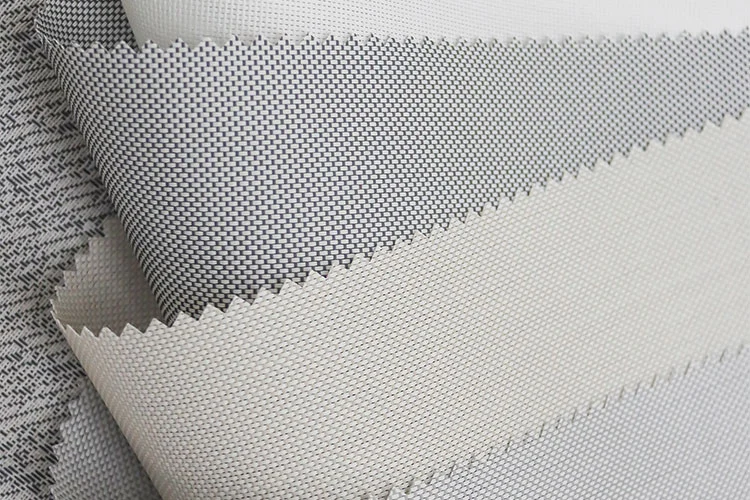
| Woven triple-layer | Three layers woven together with a dark middle core | Folds without damage, washable, UV-resistant, performance holds up | Higher upfront cost | 5–10+ years |
Bottom line: If you're in a rental and need a quick fix, coated fabric works. If you own your home, are setting up a nursery, or building a home theater, go with triple-layer woven blackout fabric. Spending an extra $15–$20 per yard buys you five extra years of performance.
1.2 Black Core vs. White Core: Which One Fits Your Room?
Within woven blackout fabrics, the middle layer can be black or white yarn. This matters more than most people realize.
Black-core blackout fabric: The middle layer uses black yarn. It absorbs light and converts it to heat, so it delivers superior thermal insulation. Ideal for west-facing windows, top-floor rooms, and hot climates.
White-core blackout fabric: The middle layer uses white yarn. It reflects more light back out, so the room stays brighter during the day when curtains are open, and the fabric takes lighter, more neutral colors. Thermal performance is slightly lower than black-core.
Our recommendation: For south- or west-facing rooms where heat gain is a concern, choose black-core blackout fabric. Our ShadeGuard™ Black-Core Blackout Fabric uses a high-density black middle layer that outperforms white-core options by roughly 15–20% in thermal testing at the same fabric weight. That translates to fewer hours of AC runtime and a noticeably cooler room in peak summer.
1.3 Fabric Weight: Heavier Isn't Always Better
Weight (measured in g/m² or oz/yd²) tells you how dense and substantial the fabric feels. Residential blackout fabrics typically range from 200 to 350 g/m².
Lighter fabrics (200–250 g/m²) drape more softly but may wrinkle more easily.
Heavier fabrics (300–350 g/m²) hang with a crisp, premium drape but require stronger curtain rods and brackets.
For most homes, 250–300 g/m² black-core woven fabric hits the sweet spot—substantial enough to drape well, light enough to handle on standard hardware. The ShadeGuard™ line sits at 280 g/m², balancing weight, drape, and ease of installation.
Ordering blackout fabric isn't as simple as picking a color and cutting to size. Answer these three questions first, and you'll avoid 90% of common mistakes.
2.1 What's Your Mounting Style?
Different mounting styles require different measurements and hardware:
Hook-style (pleated/S-hooks): Width = window width × 1.5 to 2 (for fullness/pleats). Height = from the track down to your desired endpoint.
Grommet-style (ring-top): Grommets take up about 5–8 cm of height at the top, so measure from the top of the rod down, not from the grommet holes.
Rod-pocket (traditional): Simplest but least light-tight—light leaks through the top. Only choose this for rooms where absolute darkness isn't critical.
Important: Blackout fabric almost never comes with hooks, rings, or grommets pre-attached. Decide your mounting style first, then order your fabric with the correct header finish, or choose a supplier that offers custom fabrication.
2.2 Fixed Height vs. Fixed Width—Which Measurement Rule Applies?
This is the most confusing part of ordering fabric online. Know which system your supplier uses:
Fixed-height (buy by width): The fabric comes in a standard roll height (usually 110 inches / 280 cm). You order by width. Works perfectly for standard ceiling heights up to 9 feet. Minimal waste.For 90% of standard residential windows, fixed-height buying is simpler, cheaper, and produces fewer seams. Measure width first, add 6–8 inches per side for overlap, and order that width.
2.3 Are You Buying Fabric or a Finished Curtain?
This is the #1 mistake: buying raw fabric and then realizing you need to sew hems, attach header tape, and install grommets yourself.
A finished blackout curtain = raw fabric + lining (optional) + header tape + hooks/rings/grommets + bottom hem. If you buy only the raw fabric, you're signing up for hours of sewing.
Strongly recommended: Order custom-finished panels. Give your supplier the exact window width and drop height, tell them your mounting style, and have them deliver ready-to-hang panels. The extra $20–$30 in fabrication fees is money well spent—you'll hang them in 10 minutes instead of wrestling with a sewing machine all afternoon.
You've hung your blackout fabric. Now walk around the window and inspect these three weak points—they're where most installations fail.
3.1 Top Light Leakage
This is the most common failure point. The gap between the curtain rod/track and the wall lets light pour in from above.
Solutions:
Install a valance (cornice board) above the rod to block the gap.3.2 Side Light Leakage
If your panels are only an inch or two wider than the window frame, bright stripes of light will slip in from both sides.
Solutions:
Order panels that extend at least 6–8 inches beyond each side of the window frame.
Use an L-shaped curtain track that wraps the fabric around the side walls, creating a light trap.
For extreme darkness needs (home theaters, shift workers), consider side channels that guide the fabric into wall-mounted tracks.
3.3 Bottom Drape and Wrinkles
Wrinkled fabric doesn't just look bad—the folds create gaps that leak light at the bottom edge.
Solutions:
For extra bottom weight, sew a weighted chain or lead tape into the bottom hem. This keeps the fabric hanging straight and prevents it from billowing.
If you're buying new, here's how our two main blackout fabric lines compare:
| Feature | ShadeGuard™ Black-Core Blackout Fabric | LiteShield™ White-Core Blackout Fabric |
|---|---|---|
| Core type | Black yarn middle layer | White yarn middle layer |
| Best for | West/south facing, hot rooms, home theaters | North/east facing, living rooms, light-colored decor |
| Thermal performance | Superior (15–20% better heat rejection) | Good |
| Color range | Deeper, richer tones | Lighter, brighter neutrals |
| Weight | 280 g/m² | 250 g/m² |
| Washable | Yes, machine wash cold, line dry | Yes, machine wash cold, line dry |
| Lifespan | 8–10 years | 5–8 years |
Our take: If you're dealing with afternoon sun or want maximum energy savings, ShadeGuard™ black-core fabric is the clear winner—the thermal benefit alone pays for itself within two summers. If you're furnishing a north-facing living room where heat isn't an issue and you prefer lighter colors, LiteShield™ white-core gives you excellent blackout performance at a friendlier price point.
Proper care extends the life of any blackout fabric. Follow these guidelines:
Washing: Machine wash cold on gentle cycle. Never use bleach—it breaks down the acrylic coating in coated fabrics and weakens the woven structure in triple-layer fabrics.
Buying blackout fabric doesn't have to be complicated. Stick to these three rules:
Skip coated fabric—choose triple-layer woven. The price difference pays off in longevity.
Pick black-core for hot, sunny rooms; white-core for cooler, lighter spaces. Know your window orientation before you order.
Order finished panels, not raw fabric. Let someone else do the sewing—you've got better things to do.
For west-facing rooms, home offices, or nurseries where light control and temperature really matter, ShadeGuard™ Black-Core Blackout Fabric delivers the best combination of thermal performance, drape, and durability. Hang it once, and you won't think about replacing it for the better part of a decade.
Good light control isn't a luxury—it's a quality-of-life upgrade. Spend the extra few dollars upfront, sleep better, and watch your energy bills go down. That's a return on investment you can actually see.