


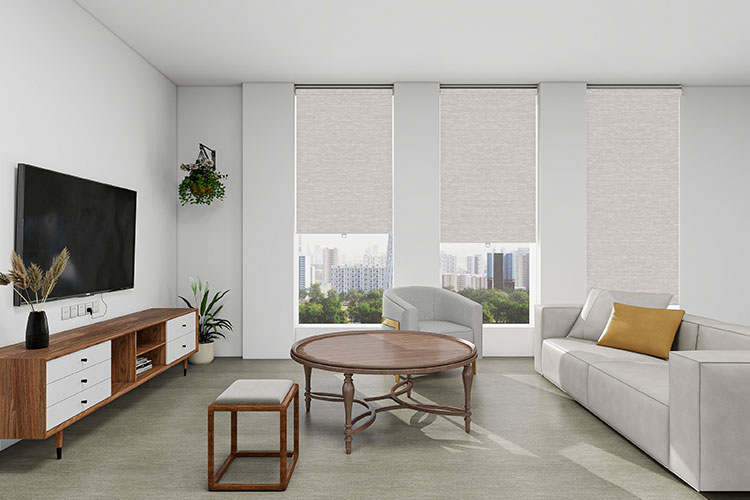


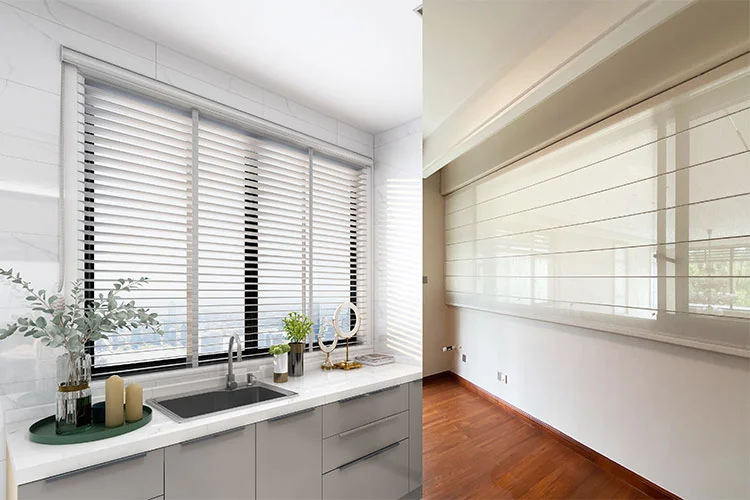
Window covering fabrics determine how much daylight enters a room, how much heat passes through the glazing, and how much visual discomfort occupants experience during bright hours of the day. The Clear Twill Glass fabric, a fiberglass twill weave in white or light tones, addresses all three concerns at once by reducing visual light transmission from 17% to 9% compared with a standard basket white construction. This article explains how the weave is built, why lower transmission does not mean a darker room, and which applications benefit most from the fabric's optical profile.
▸ Table of Contents — Click any topic to jump directly
- What Is the Fabric and How Is It Woven?
- Why Glare Control Matters More Than Total Blocking
- Light Transmission: The 17% to 9% Shift Explained
- Fiberglass Weave Construction and Durability
- Applications Across Residential and Commercial Spaces
- Specification Checklist for Buyers
- Key Performance Reference
- Frequently Asked Questions
What Is the Fabric and How Is It Woven?
Clear Twill Glass is a fiberglass fabric woven in a twill construction, which means the yarns cross in a staggered, diagonal sequence rather than the simple over-under pattern used in a plain basket weave. That structural difference changes how the fabric handles light, how tightly the yarns can be packed, and how stable the finished roll remains after coating.
The fabric is produced in white or light tones, which is significant because colour affects both reflection and glare. A lighter surface reflects a portion of incoming daylight back toward the glass rather than allowing it to pass straight through, softening the quality of the light that reaches the interior.
Twill weaving also allows the yarns to be packed more densely within the same thickness, and that density is what enables the fabric to hold a lower transmission value without needing a heavier, thicker construction. The result is a lighter roll weight with a tighter optical performance than a comparable basket weave.
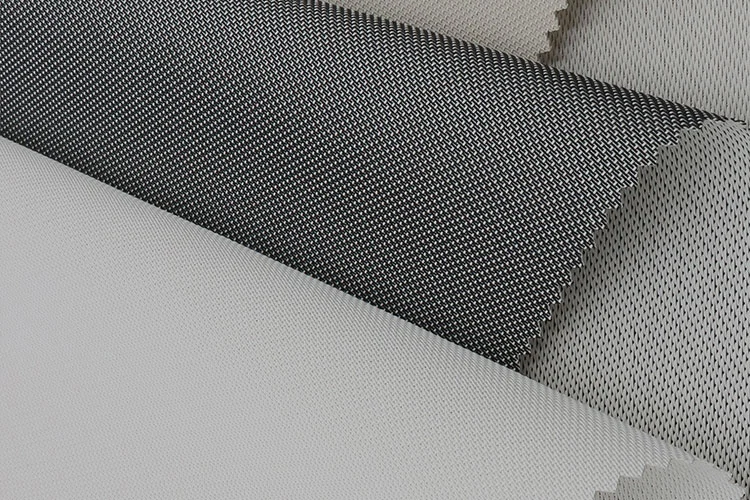
Twill Construction
Diagonal yarn interlacing allows denser packing, producing a tighter fabric with lower light transmission at a lighter roll weight.
White and Light Tones
A light surface reflects part of the incoming daylight, softening glare while keeping the interior bright and neutral in tone.
Why Glare Control Matters More Than Total Blocking
Many buyers assume that darker fabric equals better performance. In practice, the opposite is often true. A dark fabric absorbs light and converts part of it into heat, which raises the temperature of the fabric surface and increases the thermal load behind the glass. Glare is reduced, but the room heats up.
Glare is not simply brightness. It is the contrast between a very bright surface, such as a sunlit window, and the surrounding darker surfaces in the room. That contrast forces the eye to constantly readjust, which produces fatigue, reduces concentration, and in offices and classrooms has a measurable effect on comfort.
A light-coloured twill weave reduces glare by softening the light source itself rather than blacking it out. The fabric scatters and partially reflects incoming daylight, so the window no longer appears as a harsh bright rectangle. Occupants keep their view to the outside, the room stays visually open, and the eye strain associated with high-contrast conditions is reduced.
- Reduced contrast between window and interior surfaces
- Lower fabric surface temperature than dark-coloured alternatives
- Preserved outward visibility for occupants seated near the glass
- Even, neutral light quality rather than tinted or coloured illumination
- Fewer adjustments needed through the day as the sun moves
Light Transmission: The 17% to 9% Shift Explained
Visual light transmission describes the percentage of visible daylight that passes through a fabric. A standard basket white construction typically transmits around 17%. The twill weave in white or light tones brings that figure down to roughly 9%.
That reduction is not a doubling of darkness. Both values sit within the semi-open range, meaning the fabric still allows a visible connection to the outside in both cases. What changes is the intensity and the character of the light that reaches the interior.
| Fabric Construction | Visual Light Transmission | Glare Behaviour | Typical Use |
|---|---|---|---|
| Standard Basket White | Approximately 17% | Moderate glare at peak sun | General residential shading |
| White Twill Weave | Approximately 9% | Stronger glare control | Offices, screen-heavy work areas |
| Light Tone Twill Weave | Approximately 9% | Stronger glare control, warmer cast | Living rooms, hospitality interiors |
| Open Weave Screens | Above 20% | Limited glare control | View-preserving exterior shading |
The practical effect of moving from 17% to 9% is a noticeable reduction in the brightness of the window plane without a corresponding drop in overall room illumination. Because the fabric is light in colour, the light that does pass through is diffused rather than directional, which is what makes the space feel comfortable rather than dim.
Lower transmission also reduces the radiant heat that enters through the glass. Less solar energy reaching the interior means less demand on cooling systems during warm months, which is where the energy-saving benefit of the fabric originates. The gain comes from reduced heat load, not from blocking the view entirely.
Fiberglass Weave Construction and Durability
Fiberglass is chosen as the base yarn because it does not stretch, does not shrink, and holds its woven geometry under repeated rolling and unrolling. These properties matter in roller shades, where a fabric that creeps or sags over time will develop uneven edges and visible waves.
The yarns are typically finished with a coating that stabilises the weave, protects against fraying, and allows the fabric to be cut and heat-sealed without unravelling. This finish also contributes to the fabric's resistance to moisture and to the dimensional stability that keeps the shade running straight in its brackets over years of daily use.
Why Twill Weave Holds Its Shape
The staggered interlacing of a twill weave distributes tension more evenly across the fabric than a plain weave does. When the shade is under load—rolled tightly on a tube or hanging fully extended—that even distribution prevents individual yarns from taking disproportionate stress, which is a common cause of distortion in plain-weave fabrics.
The tighter packing also reduces the amount of coating required to achieve a given level of opacity, which keeps the fabric lighter and easier to handle during fabrication and installation.
Applications Across Residential and Commercial Spaces
The combination of light tone, low transmission, and dimensional stability makes the fabric suitable for a broad range of interior settings. The following applications represent the environments where its optical profile delivers the clearest benefit.
- Offices and home workspaces with screens that suffer from reflected glare
- Living rooms and dining areas facing direct afternoon sun
- Bedrooms requiring daytime privacy without a darkened interior
- Hospitality interiors where light quality affects the guest experience
- Healthcare and consultation rooms needing visual privacy and calm light
- Retail displays where merchandise must stay visible without harsh highlights
- Educational spaces where glare affects reading and concentration
In commercial projects, the fabric is often specified across an entire facade so that the light quality remains consistent from room to room. Consistency of appearance matters as much as performance in these settings, and a single fabric specification across a building avoids the patchwork effect that comes from mixing different weaves and tones.
Where a Different Fabric May Be More Suitable
The fabric is less appropriate where occupants want to keep a clear view outward, such as in a conservatory or a room with a valued landscape outlook. In those situations, an open weave screen with higher transmission would preserve the view while still reducing direct sun. The twill weave is designed for glare control first, view preservation second.
Specification Checklist for Buyers
Selecting the right fabric for a project involves confirming several technical points before the order is placed. The following sequence reflects the order in which most specification decisions are made.
- Define the light transmission target for the space, based on the activities that take place there.
- Confirm the colour tone, since white and light tones differ in reflected warmth and appearance.
- Verify the fabric width against the largest shade required to minimise seams.
- Check the coating type and whether it supports the edge finishing method used in production.
- Confirm dimensional stability figures for the roll, particularly where long drop shades are involved.
- Review care and cleaning guidance to ensure it matches the maintenance regime of the end user.
Buyers working across multiple projects often standardise on a single fabric specification to simplify inventory and reduce the risk of mismatch between rooms. Where that approach is taken, the twill weave in white or light tone offers a consistent baseline that performs well across most interior conditions.
Key Performance Reference
| Parameter | Typical Value | Notes |
|---|---|---|
| Base Material | Fiberglass yarn | Non-stretching, dimensionally stable |
| Weave Type | Twill | Diagonal interlacing, denser packing |
| Colour | White or light tone | Reflective surface reduces glare |
| Visual Light Transmission | Approximately 9% | Compared with about 17% for basket white |
| Glare Control | Improved | Light diffused rather than direct |
| Energy Benefit | Reduced solar heat gain | Lower radiant load through glazing |
| Primary Form | Roll fabric for shades and blinds | Cut and finished by fabricator |
These values serve as a specification baseline. Final performance depends on the finished shade assembly, the glazing it works with, and the orientation of the window.
Frequently Asked Questions
Does a lower light transmission value make the room darker?
Not necessarily. The values discussed here sit within the semi-open range, so the fabric still allows a visible connection to the outside. Because the fabric is white or light in tone, the light that passes through is diffused and reflected rather than absorbed. The room reads as comfortable rather than dim, even though the brightness at the window plane is reduced.
Why is fiberglass used instead of polyester for this fabric?
Fiberglass does not stretch or shrink, which keeps the fabric geometry stable across repeated rolling and unrolling. Polyester fabrics can creep over time under constant tension, producing wavy edges and uneven shade movement. For long drop shades and high-cycle applications, the dimensional stability of fiberglass is a significant advantage.
How does twill weave differ from basket weave in terms of performance?
A basket weave crosses yarns in a simple over-under sequence, while a twill weave staggers the crossings diagonally. The staggered structure allows denser packing, distributes tension more evenly, and supports a lower light transmission value at a lighter roll weight. The practical result is tighter optical control without additional fabric thickness.
Is the energy saving benefit related to the fabric colour?
Colour contributes to the effect. A light surface reflects a portion of incoming solar radiation rather than absorbing it and converting it into heat. This reduces the radiant load passing into the interior, which in turn lowers demand on cooling systems. The benefit comes from reduced heat load, not from completely blocking daylight.
Can this fabric be used in both residential and commercial projects?
Yes. The optical profile suits any interior where glare control and a neutral light tone are priorities. Residential buyers typically value the soft, even daylight and daytime privacy, while commercial specifiers value the consistency of appearance across multiple rooms and the reduced cooling demand during peak sun hours.
What information should be confirmed before placing an order?
Confirm the light transmission target for the intended space, the colour tone required, the roll width against the largest shade size, the coating type and how it interacts with the chosen edge finishing method, and the dimensional stability figures for long drop applications. Reviewing these points before ordering prevents adjustments later in production.
For fabricators, blind manufacturers, and interior specifiers, the optical profile of this twill weave fabric offers a practical answer to a persistent design problem: how to soften harsh daylight without darkening the room or tinting the interior. Confirming the transmission target, colour tone, and roll dimensions before ordering ensures the finished shade performs as intended once installed.
HanDe produces fiberglass window covering fabrics and related materials from its manufacturing facilities, supplying blind producers and interior projects across domestic and international markets.
